The Mosaic Heritage of the Dead Sea

Protecting the antiquities within the Southern Ghawr region has posed significant challenges for the Jordanian Department of Antiquities. The complexities arise from the local economic circumstances and the development of lands that may harbor undiscovered ancient sites. Archaeological surveys have played a vital role in uncovering such sites, even when they are not immediately visible on the surface. The cooperation of local communities is essential to identify and safeguard these treasures, many of which are displayed in local museums. It is crucial for local people to comprehend that they are custodians of this heritage and that they can benefit economically from its preservation.
Conservation of Mosaic Pavements
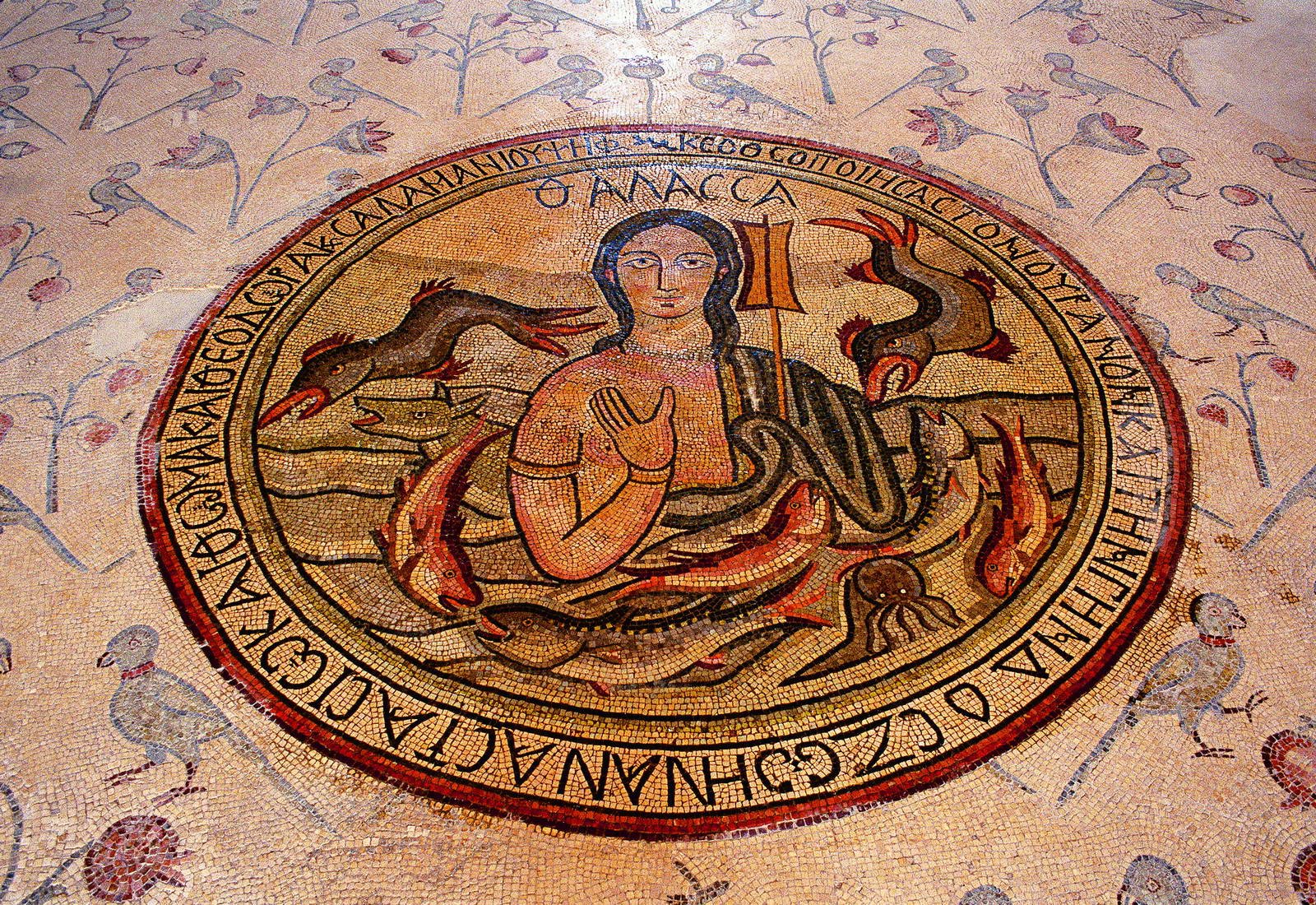
Mosaics hold a significant place in architectural history, embodying cultural, historical, and artistic narratives. Modern conservation strategies prioritize preserving these mosaics in their original archaeological context, referred to as in situ. However, circumstances may necessitate their relocation if their current environment is at significant risk or has already been compromised. The mosaics featured in this exhibition were excavated from a collapsed room believed to be the Diaconicon of an ancient church. Approximately one thousand fragments, still adhering to their original mortar, have been retrieved and are currently undergoing conservation at this museum.
Technique of Mosaic Making
The creation of mosaics involves multiple layers of cobblestones and lime mortar. These components are fundamental in understanding the materials, technology, and construction techniques applied in mosaic pavements. When removal is required, meticulous excavation and comprehensive documentation of the bedding mortars are imperative. An example includes the Nave mosaic in the Church of St. Lot, which was extracted due to deteriorating foundations. During this careful process, the impressions of those who laid the mortar were uncovered within the bedding layers, some of which are displayed in this exhibition. Once the foundations of the Nave were secured, the upper layer of the mosaic pavement (tesselatum) was restored in place.
History of Mosaic Conservation
The origin of mosaic art traces back to the 4th century BC in Hellenistic Greece and was later introduced to the East due to Alexander the Great’s conquests. Early mosaics employed river pebbles, but by the Roman and Byzantine eras, they transitioned to more refined tesserae, or small cut stone cubes. Understanding construction methodologies is vital for effective conservation of mosaics. Significant conservation efforts in the Church of Lot at Dayr ‘Ayn ‘Abata have involved careful documentation, stabilization in situ, and successful removal and reinstallation of mosaics. Two mosaics are now prepared for exhibition at this museum.
The Hellenistic and Islamic Influence
Hellenistic cities experienced continuous occupation, resulting in the loss of much of their original 4th-2nd century BC archaeological remnants. However, artifacts from the subsequent Roman, Byzantine, and Islamic periods reflect an enduring Greek influence. Evidence such as the use of the Greek language in official documents, tombstones, and graffiti persisted until the 7th-8th centuries AD. The early Islamic monetary systems drew inspiration from previous models showcasing human images. In the 9th century AD, the Bayt al-Hikma in Baghdad became a hub for translating ancient Greek works into Arabic, preserving this knowledge through the Middle Ages until it reached Western Europe.
The Hellenic Legacy
The Hellenistic period commenced with Alexander the Great's victory over the Persians in 333 BC, initiating over a millennium of Hellenic influence on Near Eastern societies. These communities adopted aspects of Greek culture, which is vividly illustrated by the remnants of Classical temples, theatres, and hippodromes, alongside the daily use of the Greek language, innovative pottery, coins, and mosaics. The Greeks integrated with local populations, establishing lasting roots in new cities. The Decapolis, a coalition of ten cities, emerged within Jordan, and the Nabataeans thrived by leveraging their proximity to trade routes for frankincense and spices, further infused with Hellenic culture.
The Khirbat Qayzun Cemetery
In 1996, a remarkable archaeological find at Khirbat Qayzun revealed a wealth of information about the Nabataean people. This ancient cemetery contained over 5,000 burials, with deep shaft tombs located in the southern sector, resembling those found in Khirbat Qumran and as-Sikkin, dating from the 1st-2nd centuries AD based on pottery and textile analyses. The northern section predominantly featured shallow cist tombs with minimal grave goods, highlighting a few early Christian tombstones from around the 4th century AD.
Nabataeans along the Dead Sea
From the 1st century BC to the 2nd century AD, the Nabataeans expanded their territory from their capital in Petra to the shores of the Dead Sea, using a network of fortified roads. They cultivated date palms and balsam plants for perfume oil, and were instrumental in harvesting valuable salt and bitumen. Historical texts, such as those by Josephus and Pliny the Elder, alongside the 'Babatha archives', confirm these economic enterprises of the Nabataeans.
A Glimpse into Monastic Life
During the early Byzantine era, life in Christian monasteries adhered to strict protocols. Monks, derived from the Greek word for solitary living, practiced their faith through prayer, labor, and meals taken alone in small cells or caves surrounding the monastery. Their diet mainly consisted of bread, fish, fruits, and vegetables, with communal gatherings for prayers and modest feasts occurring on special occasions. Monks were often engaged in gardening, weaving, and providing hospitality to travelers and pilgrims. Recent archaeological excavations at Dayr ‘Ayn ‘Abata have yielded enlightening evidence of these monastic practices.
Ongoing Discoveries
Approximately 3,500 years ago, during the Middle Bronze Age, the known settlement in the Southern Ghawr was Dhahrat adh-Dhra’. Numerous large cairns, signifying family tombs from this era, dot the hillsides. Over 20 such tombs have been excavated at Dayr ‘Ayn ‘Abata, with select finds featured here. Other similar cairn tombs have been uncovered near Safi and Khanayzira. Significant agricultural settlements emerged around 3,000 years ago in the Iron Age, with discoveries at Tulaylat Qasr Musa al-Hamad and Khanayzira revealing distinctive Moabite pottery and quern stones indicative of extensive wheat farming. Notably, the absence of large fortifications suggests a relatively peaceful era.

Frequently Asked Questions
- What is the significance of mosaics in Jordan's heritage?
- Mosaics hold a significant place in architectural history, embodying cultural, historical, and artistic narratives important to Jordan's heritage.
- How are local communities involved in the preservation of mosaics?
- Local communities are essential for identifying and safeguarding antiquities, including mosaics, which can provide economic benefits through their preservation.
- What techniques are used in the conservation of mosaics?
- Conservation strategies prioritize preserving mosaics in their original archaeological context, with meticulous excavation and documentation required if relocation is necessary.
- What historical influences shaped the art of mosaic making in Jordan?
- Mosaic art originated in the 4th century BC in Hellenistic Greece and was further developed during the Roman and Byzantine eras.
- Where can I see mosaics and learn about their history in Jordan?
- Many mosaics are displayed in local museums, with exhibits showcasing significant conservation efforts from various archaeological sites.